

Original price was: ₹11,000.00.₹9,000.00Current price is: ₹9,000.00.
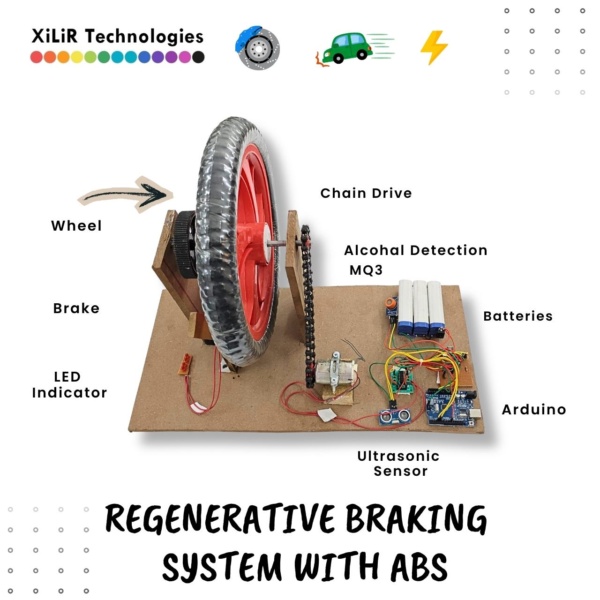
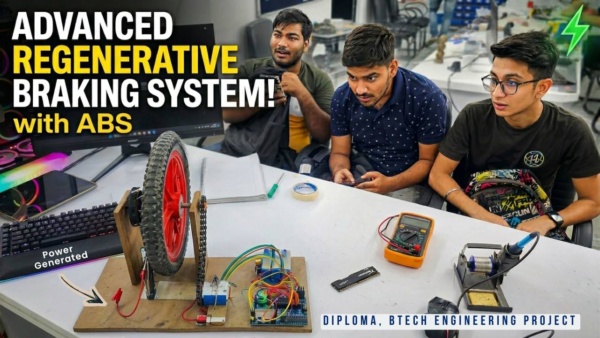
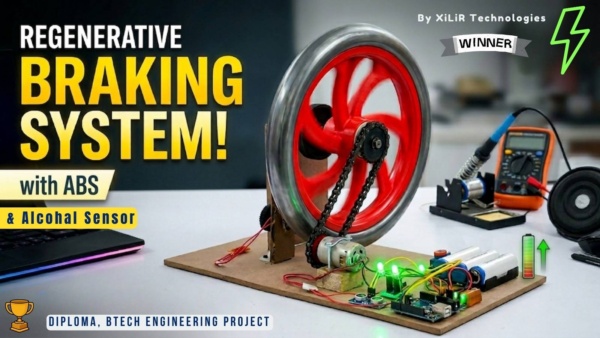
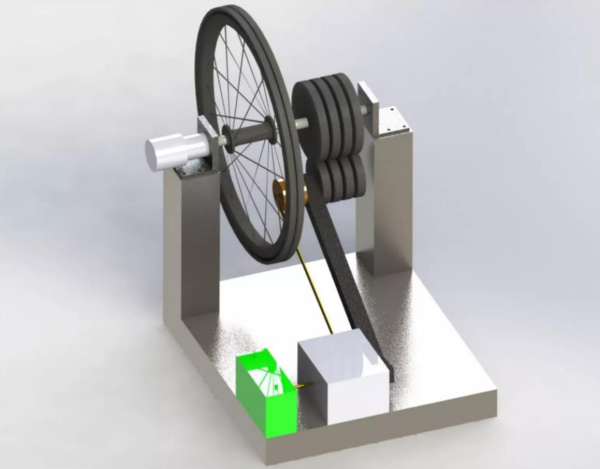
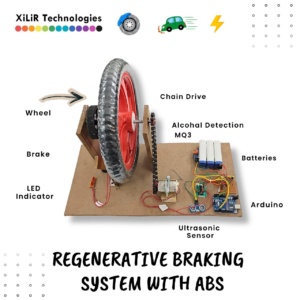
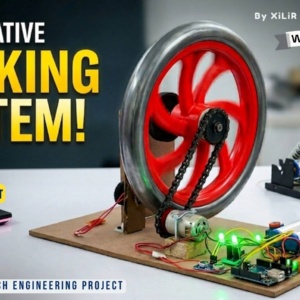
This project presents a comprehensive solution for enhancing road safety and energy efficiency by integrating a Regenerative Braking System with ABS and Alcohol Detection System.
📺 YouTube Short : Quick Watch Now
📺 YouTube Video : Full Watch Now in HINDI
Introduction
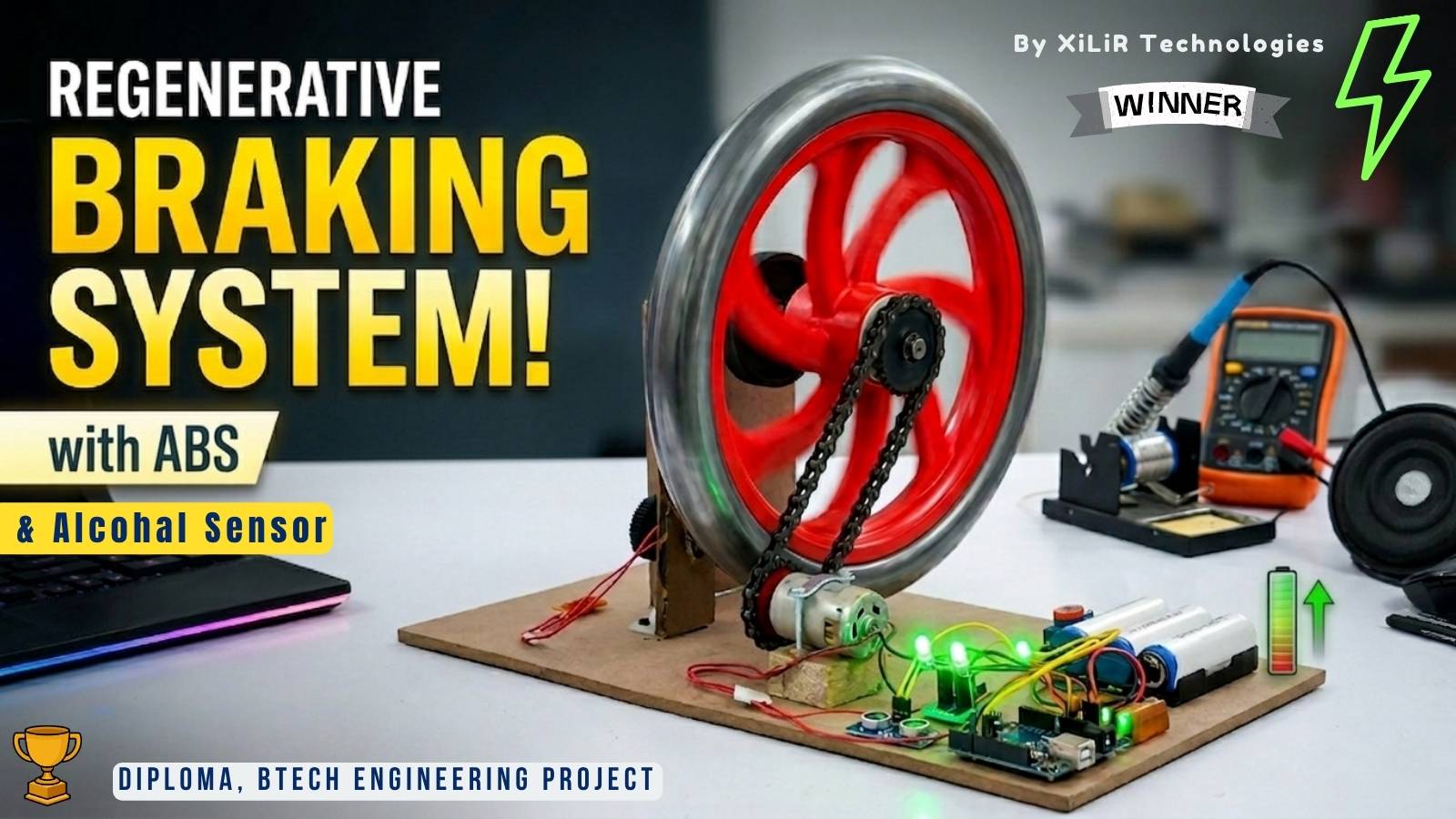
The Regenerative Braking System with ABS and Alcohol Detection is an advanced safety and energy-efficient vehicle technology designed for modern smart transportation systems. The regenerative braking mechanism captures the kinetic energy produced during vehicle deceleration and converts it into electrical energy. This recovered electrical energy can be reused to recharge the vehicle battery, improving overall energy efficiency and reducing energy waste that normally occurs in traditional friction braking systems.
In addition to energy recovery, the system integrates an ABS-like braking mechanism using an ultrasonic sensor. The ultrasonic sensor continuously monitors the distance between the vehicle and obstacles ahead. When an object is detected within a predefined range, the system gradually slows down the motor. If the object approaches closer, controlled braking pulses are applied to prevent wheel lock-up, improving vehicle stability and control similar to an Anti-lock Braking System (ABS).
To further enhance vehicle safety, the system includes an Alcohol Detection module using an alcohol sensor. The sensor continuously analyzes the driver’s breath to detect alcohol concentration. If alcohol is detected above the safe threshold level, the system prevents the vehicle from starting or disables motor operation. This safety mechanism helps reduce the risk of drunk driving and improves road safety.
By combining energy recovery, intelligent braking control, and alcohol detection safety mechanisms, the system demonstrates a smart vehicle safety model suitable for electric vehicle technology studies and engineering research projects.
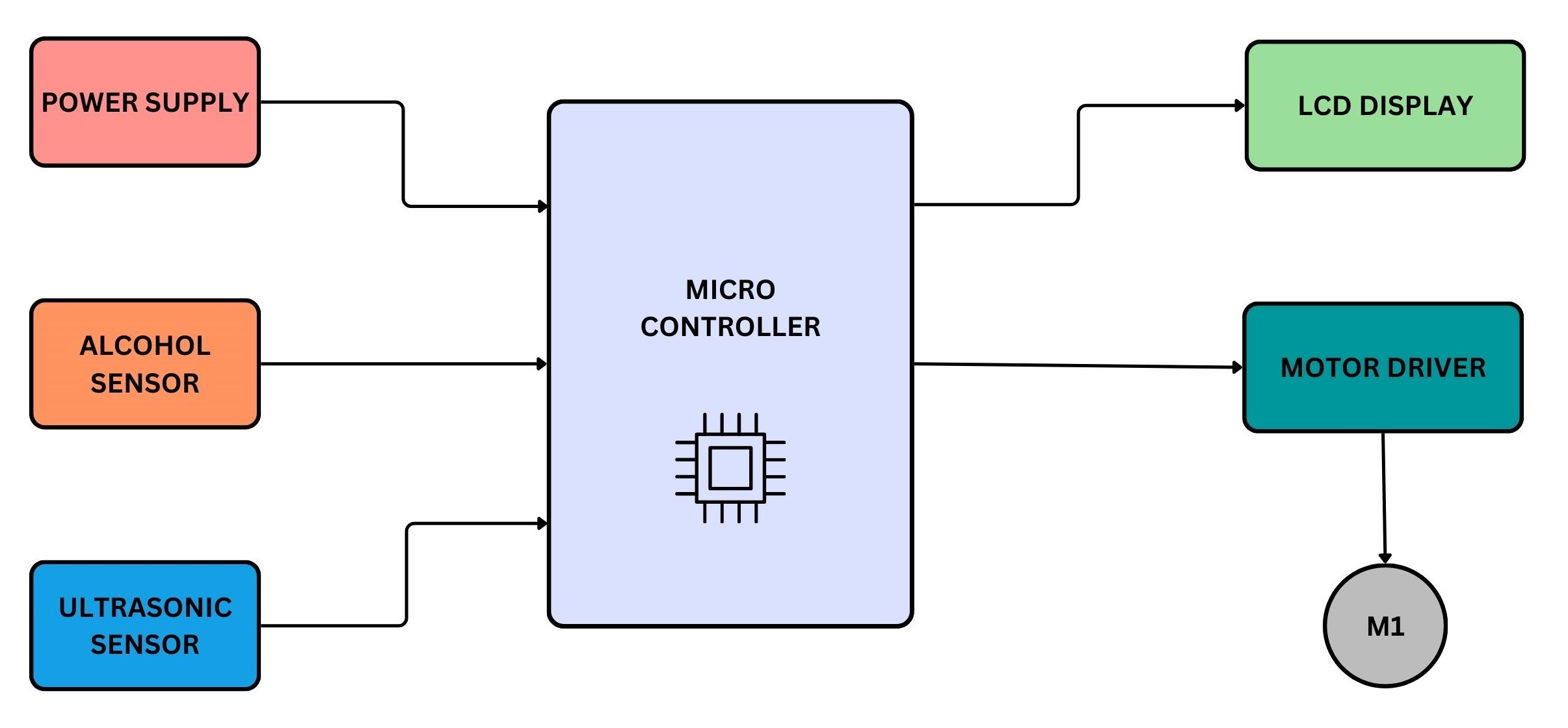
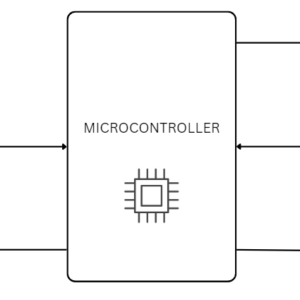
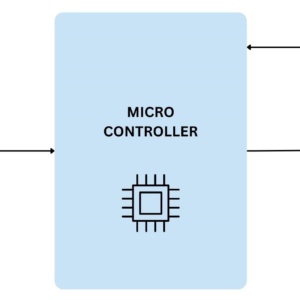
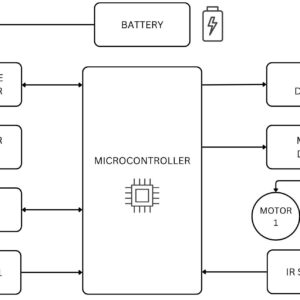
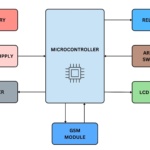
BLOCK DIAGRAM
HARDWARE COMPONENTS
SOFTWARE
METHODOLOGY
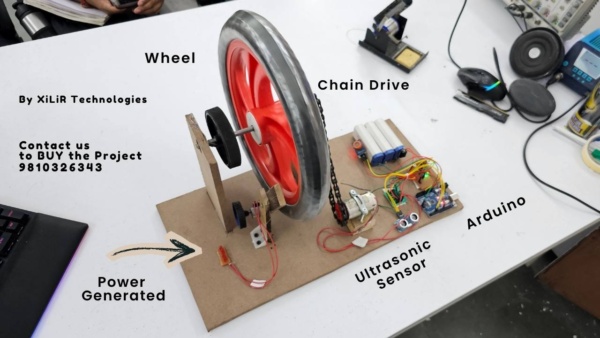
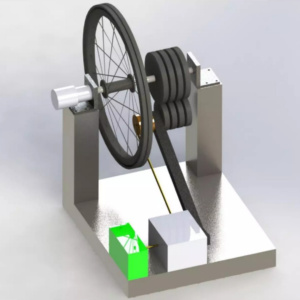
The Advanced Regenerative Braking System operates using a microcontroller-based control mechanism integrated with sensing, braking, and energy recovery units. In this project, the battery and solar panel provide the required input power to the circuit through a regulated 5 V supply, which is used to operate the Arduino microcontroller, ultrasonic sensor, and control section. The ultrasonic sensor continuously measures the distance between the moving wheel setup and any obstacle placed in front of it. When the detected distance becomes less than the predefined limit, the Arduino sends a control signal to the motor driver so that braking action can be applied.
During normal running conditions, the motor rotates the wheel continuously. When braking is applied, the rotating mechanism is coupled to the stepper motor used as a generating element. At the time of deceleration, the kinetic energy of the rotating wheel is not completely wasted as heat, but a portion of it is converted into electrical energy by the stepper motor. This represents the fundamental concept of regenerative braking, where mechanical energy is converted into electrical energy during braking.
The kinetic energy available in the rotating system can be expressed as:
KE = (1/2) × m × v²
where
m = mass of the moving body
v = velocity of the wheel
During braking, part of this kinetic energy is converted into electrical energy and supplied to the output section.
The electrical power generated by the system can be calculated using the equation:
P = V × I
where
V = generated voltage
I = generated current
For this project, the measured generated voltage is 6 V and the generated current is 40 mA.
40 mA = 0.04 A
Therefore,
P = 6 × 0.04
P = 0.24 W
Thus, the regenerative braking section generates approximately 0.24 W of electrical power during braking.
The electrical energy generated over a period of time can be calculated as:
E = P × t
where
P = generated power
t = time
If the braking-based generation continues for 10 seconds, then:
E = 0.24 × 10
E = 2.4 J
Therefore, the system can generate approximately 2.4 joules of electrical energy in 10 seconds of braking operation.
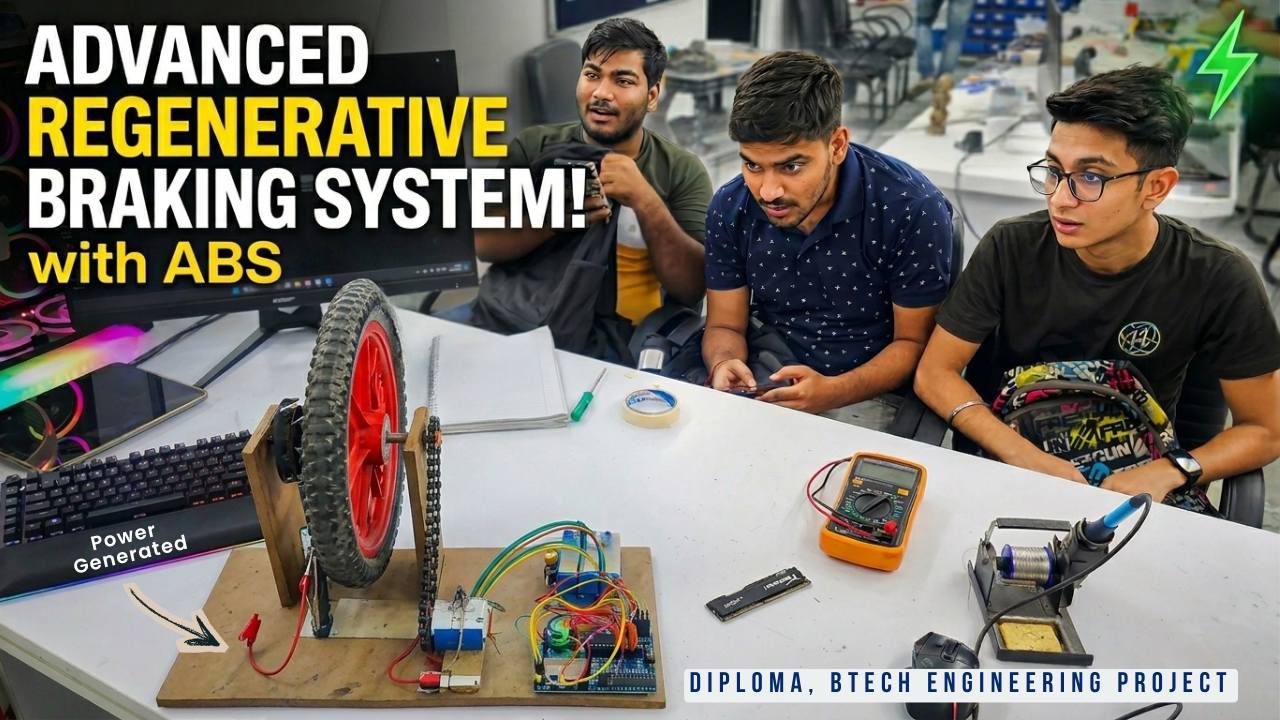
In the practical demonstration of the project, this generated electrical energy is sufficient to glow four LEDs simultaneously. The LED load confirms that the energy recovered during braking is usable electrical energy. When the stepper motor generates approximately 6 V and 40 mA, the recovered power is enough to illuminate four LEDs connected in the circuit.
The current relationship can also be expressed as:
I = Q / t
where
I = current
Q = electric charge
t = time
The voltage generation in the stepper motor is based on the principle of electromagnetic induction described by Faraday’s Law, which can be expressed as:
E = − N (dΦ / dt)
where
E = induced voltage
N = number of turns in the coil
dΦ/dt = rate of change of magnetic flux
When braking causes the rotor of the stepper motor to rotate, the changing magnetic flux induces voltage across the motor windings, generating electrical power.
Therefore, when braking is applied in this project, the rotating wheel drives the stepper motor in generator mode and produces approximately 6 V and 40 mA, resulting in an electrical power output of 0.24 W. This generated energy is used to power four LEDs, demonstrating that the regenerative braking mechanism successfully recovers part of the kinetic energy that would otherwise be lost during braking. This improves the overall energy efficiency of the vehicle system and demonstrates the practical application of regenerative braking technology.
KEYWORDS
Regenerative Braking System with ABS and Alcohol Detection using arduino microcontroller, Hybrid Vehicle Braking Technology with alcohol detection, Alcohol Sensor Integration with ABS, Alcohol Detection Safety Features for vehicle, Advanced Braking System Technology with alcohol dtetction project, ABS and Alcohol Interlock System for vehicle, Alcohol-Activated ABS, Smart Braking with Alcohol Detection for vehicle
Students can enhance or modify this project based on college syllabus, guide instructions, or personal interest.
Customizations help improve innovation, marks, and practical understanding.
Available Customization Options:
🌐 IoT/ AI/ ML Integration ( ThingSpeak, Blynk, Firebase, Web Dashboard etc. )
☀️ Solar Power Integration
🤖 Machine Learning / AI Modules
📡 GPS & GSM Based Tracking / Alerts
📟 Additional Sensors (as per application)
📲 Mobile App / Web Monitoring
📊 Advanced Data Logging & Graphs
⚙️ Hardware & Software Feature Modifications
🎯 Customization as per College or Guide Requirement
If you need any additional feature or modification,
📞 Contact us on WhatsApp and share your requirement.

Early Project Booking Recommended
Early Project Booking – Strongly Recommended
Students are advised to book their final year or semester project early, even with just a title or brief idea. Early booking helps us reserve your preferred topic, start documentation, diagrams, code planning, and component preparation in advance, and provide timely academic guidance.
You will receive complete documentation (abstract, report, block diagram, circuit, code explanation) well before submission. The working hardware kit will be delivered as per your college schedule. PPTs for reviews, viva, or seminars will be prepared on request.
Book early → Stay stress-free → Focus on learning.
Contact us with just the project title—we’ll handle the rest.




Reviews
There are no reviews yet.