

Original price was: ₹18,500.00.₹12,650.00Current price is: ₹12,650.00.
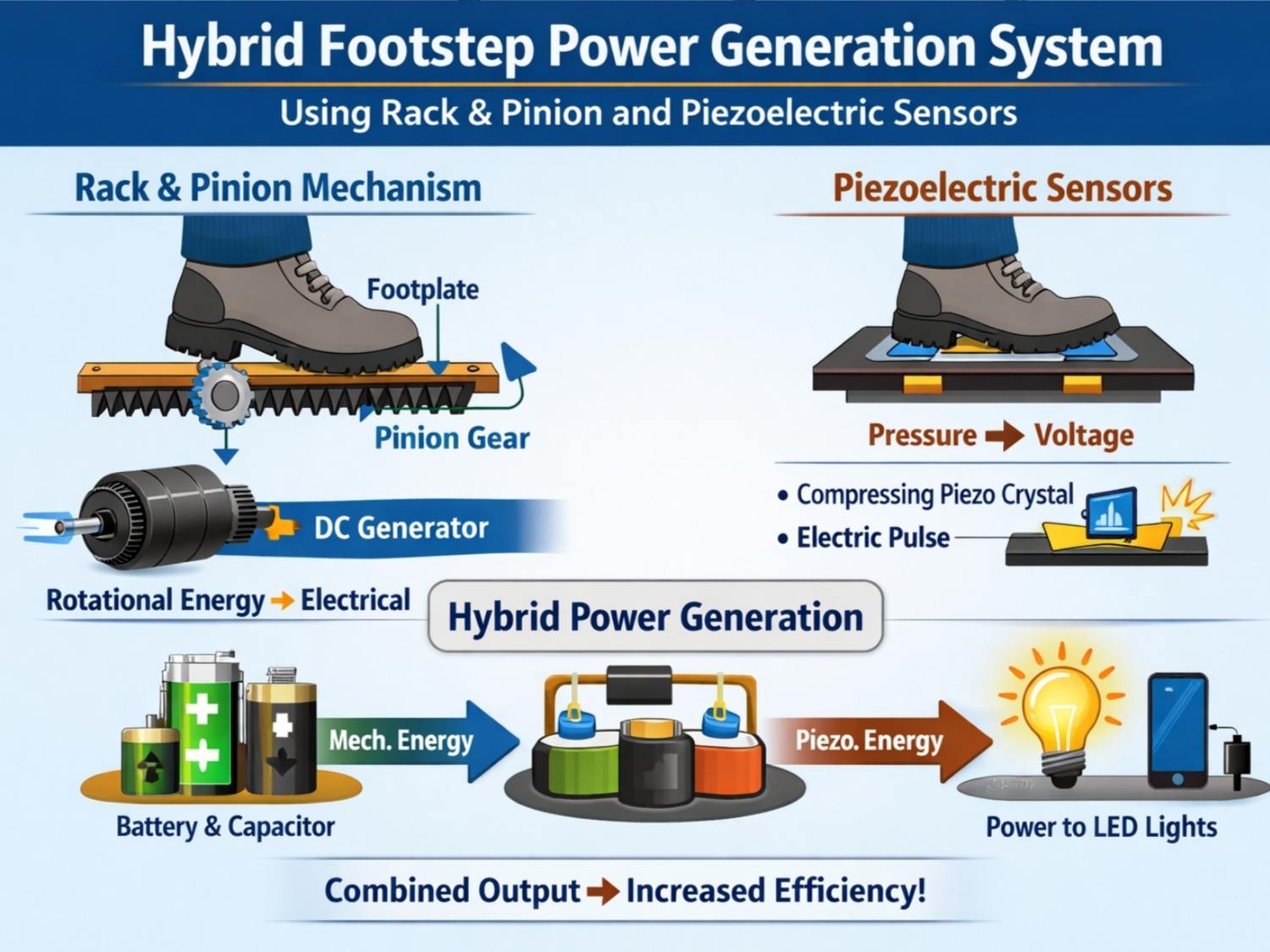
This system generates electricity from human footsteps using a hybrid approach:
👉 Combining both increases overall efficiency + output power
📺 YouTube Video : Watch Now
YouTube Short: Watch Video
Footstep → Mechanical System → (Rack & Pinion → Generator)
→ Piezo Sensors → Rectifier → Voltage Regulator → Battery → Load (LED/LCD/IoT)
#FootstepEnergyGeneration #RackPinionMechanism #EnergyHarvesting
#RenewableEnergy #GreenEnergy #SustainablePower
#FinalYearProjects #BTechProjects #MTechProjects
#CapstoneProjects #SmartInfrastructure #CleanEnergy
📘 Introduction
Energy consumption has been increasing continuously as human civilization progresses. From primitive times, humans relied mainly on renewable energy sources such as solar energy, wind, and water. However, the rapid growth of industrialization and population has resulted in excessive dependence on fossil fuels, which are limited and environmentally harmful. Therefore, developing alternative and sustainable energy sources has become an essential requirement.
One promising solution is the utilization of human mechanical energy, particularly energy generated during walking. In crowded areas such as railway stations, bus stands, temples, shopping malls, airports, and pedestrian walkways, thousands of people walk every day. The mechanical energy produced by these footsteps is usually wasted. If this wasted energy can be captured and converted into electricity, it can become an important renewable energy source.
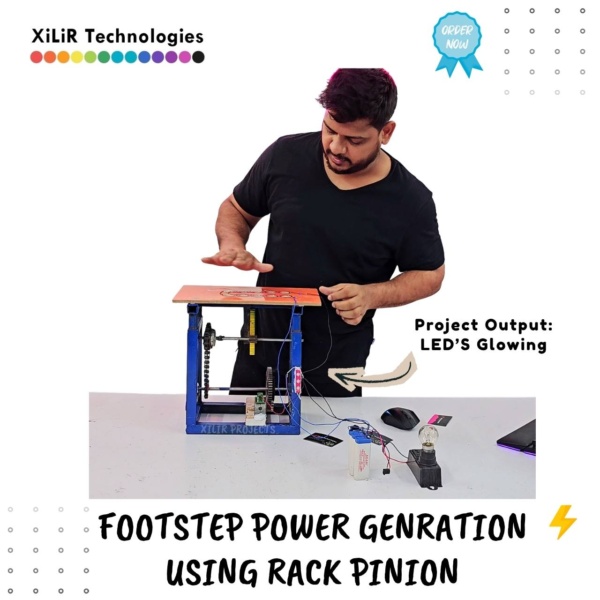
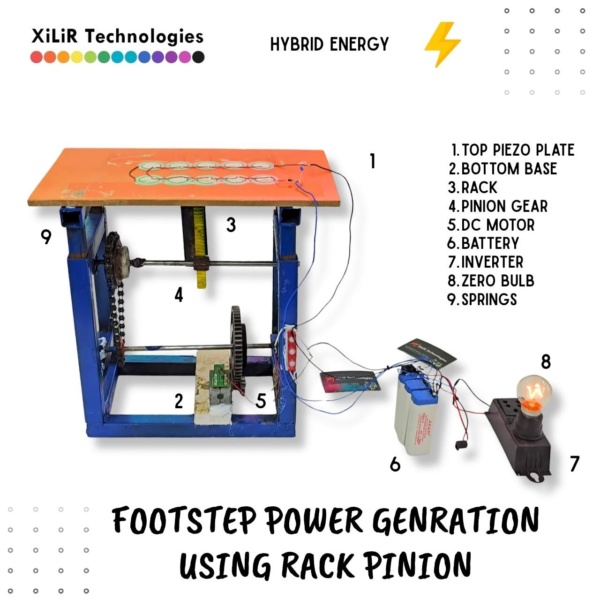
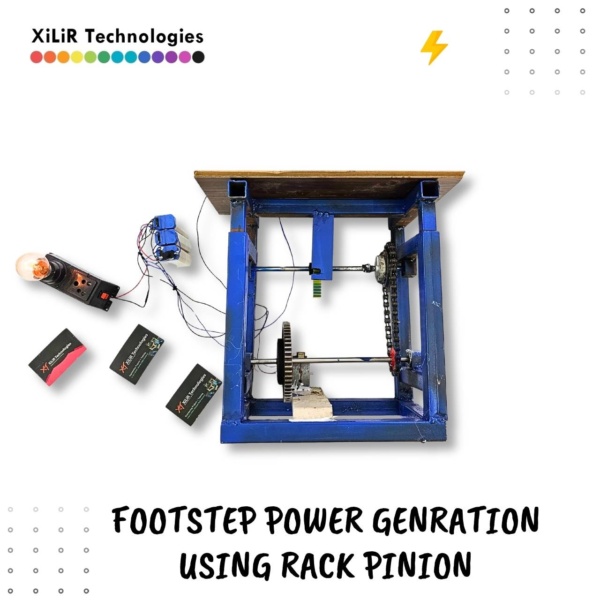
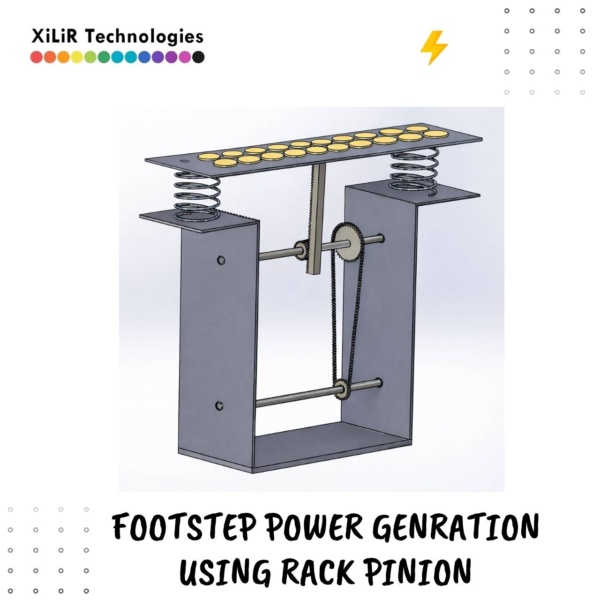
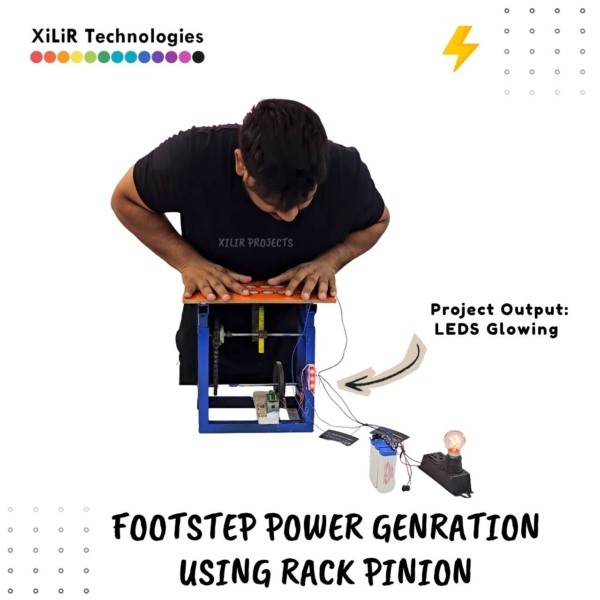
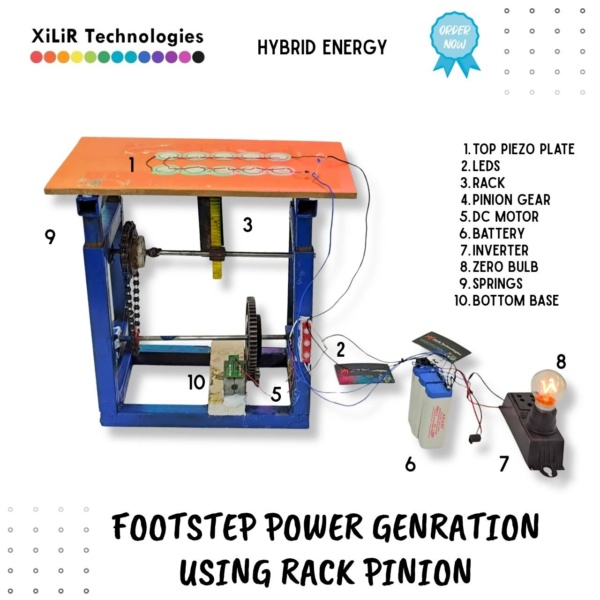
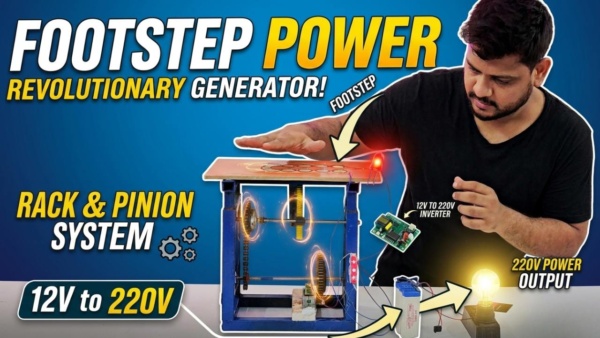
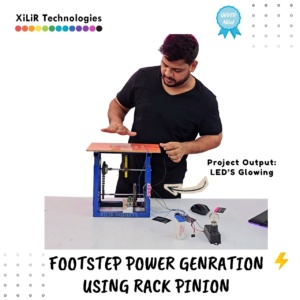
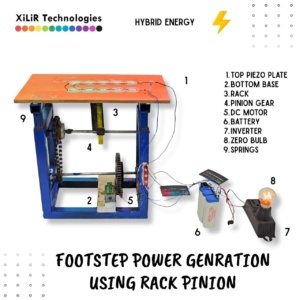
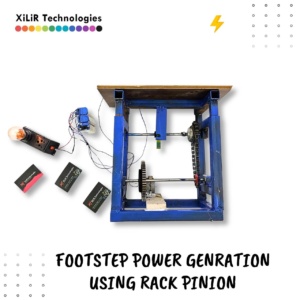
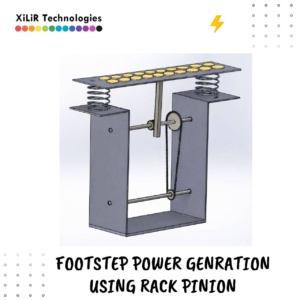
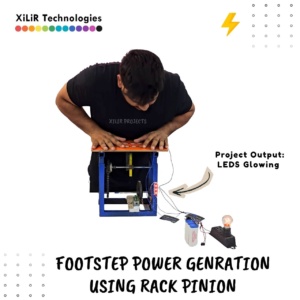
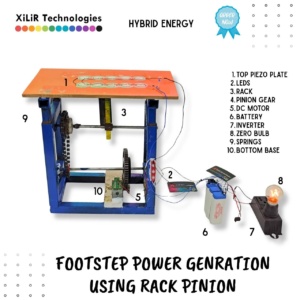
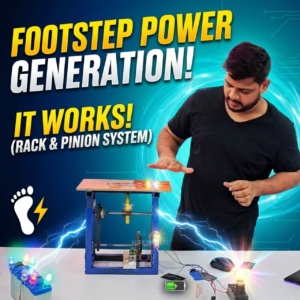
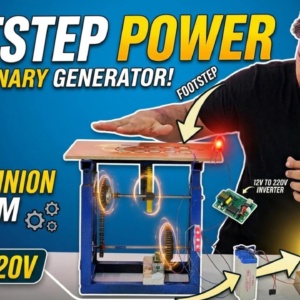
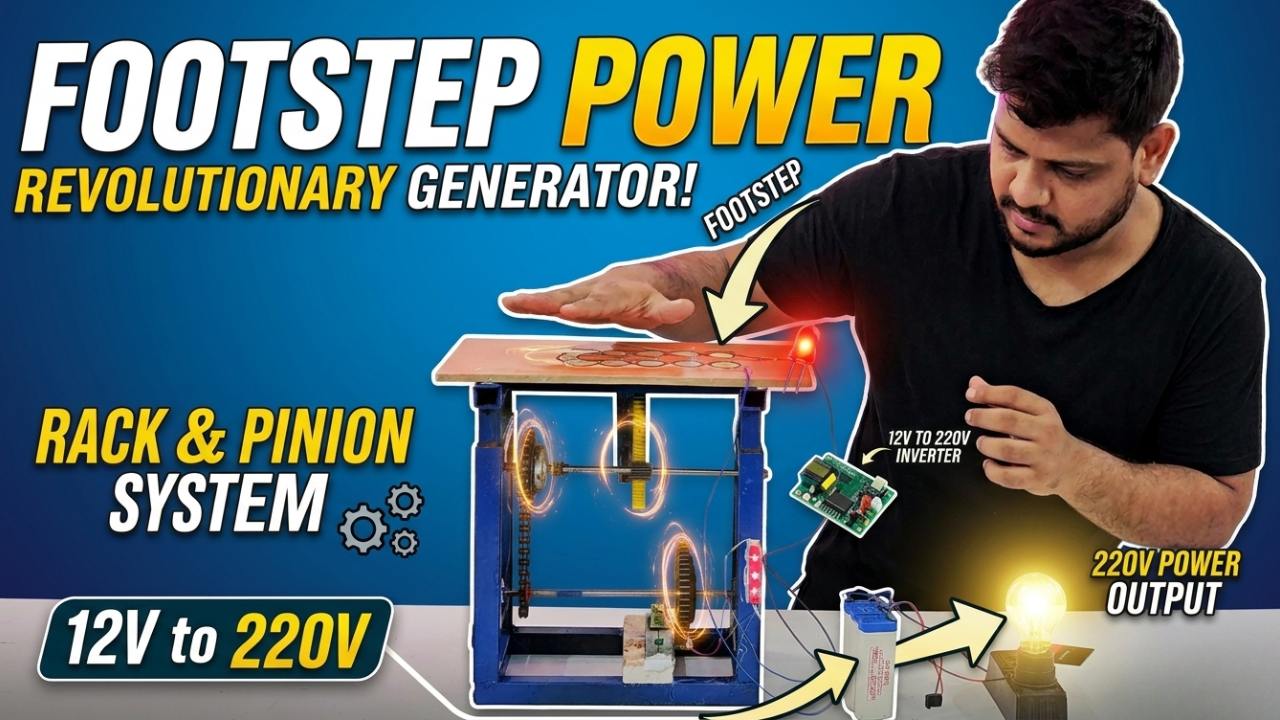
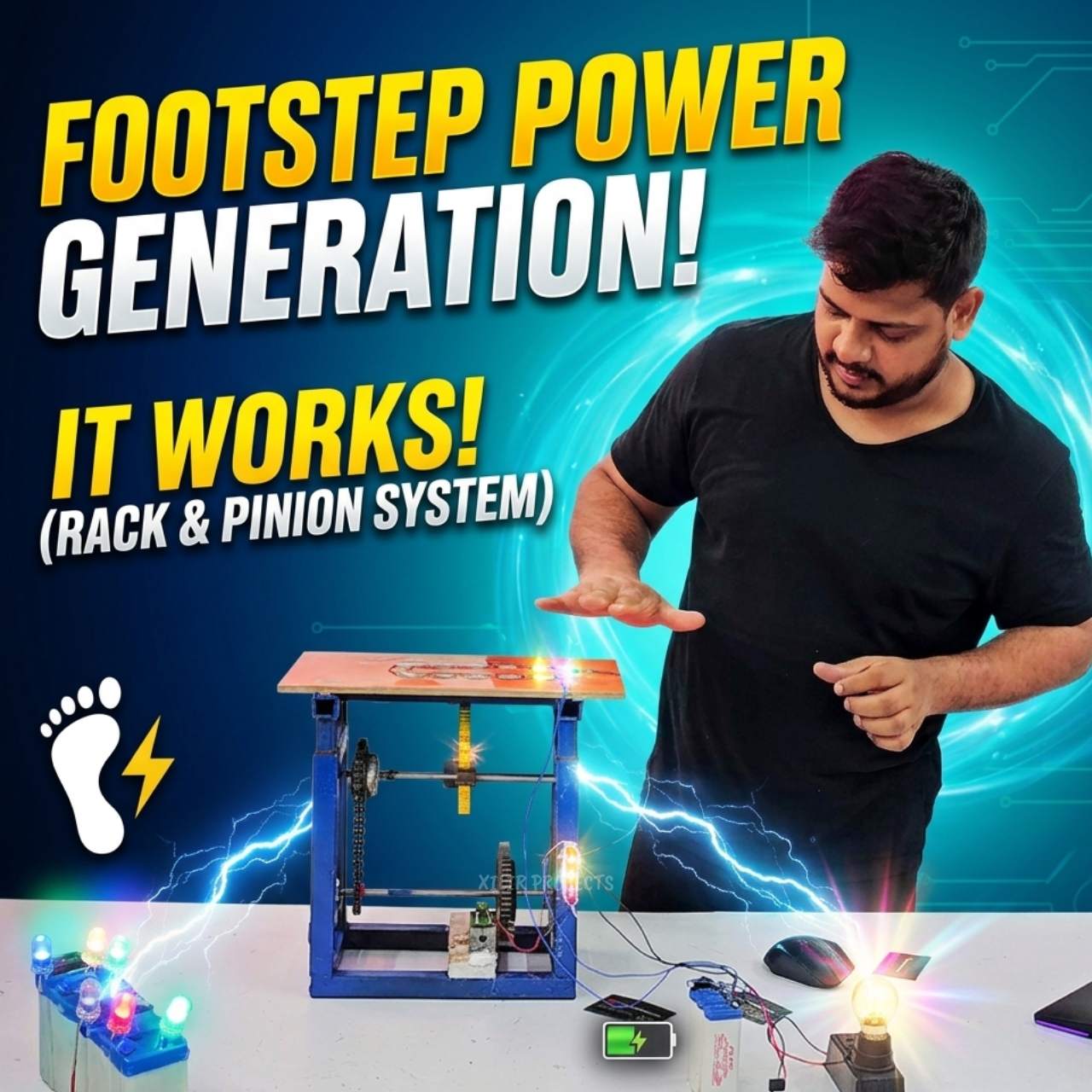
This project demonstrates a Footstep Power Generation System using a Rack and Pinion Mechanism. When a person steps on the platform, the applied force compresses the spring mechanism and moves the rack downward. The rack engages with a pinion gear that converts linear motion into rotational motion. This rotation is transferred through a chain and sprocket mechanism, which drives a DC generator to produce electrical energy.
The generated electrical power is stored in a 12V rechargeable lead-acid battery and can be converted into 230V AC using an inverter to power electrical loads such as bulbs or small appliances. This system demonstrates how human locomotion energy can be transformed into useful electrical energy for sustainable power generation.
🎯 Objectives
📊 Block Diagram
Block Diagram : Rack and Pinion Based Footstep Power Generation System
🔁 System Overview
🛠️ Components
⚙️ Methodology
The working principle of this project is based on mechanical energy harvesting using rack and pinion transmission. When a person steps on the top plate, the applied force compresses the spring mechanism and moves the rack downward. This vertical motion of the rack engages the pinion gear and produces rotational motion.
The rotation of the pinion gear drives a shaft connected to a chain and sprocket transmission system, which transfers motion to another shaft. A gear mechanism is used to increase the rotational speed of the shaft for efficient power generation.
The rotating shaft drives a DC generator, which converts mechanical energy into electrical energy through electromagnetic induction. The generated electrical energy is stored in a 12V rechargeable lead-acid battery.
The stored energy can then be supplied to electrical loads. An inverter circuit converts the 12V DC supply into 230V AC, allowing the system to operate household electrical devices such as bulbs or small appliances.
This approach demonstrates how simple mechanical systems can capture wasted human energy and convert it into useful electrical power. Such systems can be installed in public walkways, railway stations, shopping malls, stadiums, and busy pedestrian areas to generate renewable electricity.
***************************************************
Design and Calculation
1. Rack and Pinion Based Mechanical Energy Generation
Material: Cast iron
Outside diameter: 25 mm
Circular pitch = 3.14 / 25 = 0.1256 mm
Pressure angle: 21°
Pitch diameter: D = N / P = 0.8 mm
Addendum = 1 / 25 = 0.04 mm
Dedendum = 1.157 / 25 = 0.04628 mm
Circular tooth thickness = 1.57 / 25 = 0.628 mm
Pitch circle diameter of gear = 25 mm
Circumference of gear = 3.14 × 25 = 78.5 mm
Material: Cast iron
Width: 1.5 mm
Height: 130 mm
Speed: 300 RPM
Type: DC geared motor
Capacity: 12 V
Let us consider:
Mass of body = 60 kg
Height after step = 13 cm = 0.13 m
Force = Mass × Gravity
Force = 60 × 9.81
Force = 588.6 N
Work done = Force × Distance
Work done = 588.6 × 0.13
Work done = 76.518 J
Output power = Work done / Time
Assuming time for one step = 60 s for average estimation,
Output power = (588.6 × 0.13) / 60
Output power = 1.27 W
Thus, the rack and pinion mechanism can generate approximately 1.27 W under the given operating condition.
The piezoelectric section of the hybrid model generates electricity when mechanical pressure is applied to the piezo sensors during walking. Among the available piezoelectric materials, PZT (Lead Zirconate Titanate) is most commonly used because of its strong piezoelectric effect and high conversion efficiency.
Single tap: 3 V – 8 V (pulse)
Continuous steps: 8 V – 15 V
After booster: 12 V – 17 V
Single tap: 5 µA – 20 µA
Continuous steps: 50 µA – 200 µA
With storage capacitor: 0.5 mA – 2 mA (short bursts)
Practical peak current with capacitor:
I practical ≈ 1 mA
Power is given by:
P = V × I
Taking boosted output voltage = 12 V
Practical current = 1 mA = 0.001 A
P = 12 × 0.001
P = 0.012 W
Thus, the piezoelectric section can generate approximately 0.012 W under practical boosted and stored conditions.
The piezoelectric system does not provide fast battery charging, but it supports slow charging or trickle charging. The battery voltage increases gradually with continuous tapping or repeated footsteps.
Example observation:
A 3.7 V battery increased to 3.8 V in 60 minutes under continuous tapping.
This shows that the piezoelectric module is suitable for low-power energy harvesting and gradual energy storage applications.
In the proposed hybrid footstep power generation model, both the rack and pinion mechanism and the piezoelectric sensing system work together to harvest energy from the same footstep.
Rack and pinion output power = 1.27 W
Piezoelectric output power = 0.012 W
Total hybrid output power = 1.27 + 0.012
Total hybrid output power = 1.282 W
Hence, the hybrid footstep power generation system provides better energy harvesting performance compared to a single rack-pinion system or a single piezoelectric system alone.
****************************************************
Titles Suggestions
footstep power generation system, hybrid energy harvesting, rack and pinion generator project, piezoelectric sensor electricity generation, smart energy harvesting system, human footstep electricity project, renewable energy project engineering, mechanical to electrical energy conversion, piezoelectric footstep project, rack pinion mechanism working, hybrid power generation system, smart city energy harvesting, arduino footstep power project, eco friendly power generation system, innovative energy project, engineering final year project energy harvesting
========================
👉🚀 Don’t forget to SUBSCRIBE for more Science/ Diploma/ Engineering Projects !
========================
🔖 What’s Included with your Project ?
💯 Fully Working & Assembled Project
📘 Docs – Includes synopsis, PPT, report & diagrams
🔄 Circuit & Block Diagrams – Clear and labelled
💻 Arduino Code + Training – Upload & customize easily
⚙️ Working Principle Explained
📦 Component Specs + BOM
📑 Datasheets Provided – For sensors and modules
🔌 Complete Wiring Guide
🎓 Viva Q&A Help – With expert support via WhatsApp
🙌 Need custom features or upgrades? Just ask — we’re happy to help! 🙌
🚚 Delivery & Payment
✔ Cash on Delivery Available (India Only)
✔ Safest, Secure & Trackable delivery across Globally.
⭐ Trusted by 20,50,000+ Students, Teachers & Innovators
🏆 Serving the academic & research community since 2012
📞 To Buy/ Make this project with training
• • • • • • • • • • • • • • • • • • • • • • •
Contact us:
👨🏼🏭 Dr. Vipin Kumar Sharma
🎓 Ph.D., M.Tech, B.Tech (ECE), C.E, D.E NS.
👨🏫 Lecturer | 🚀 Researcher | 🤖 Robotics | 🌐 IoT
📱 WhatsApp (Direct Support) Hindi/ English Language
• • • • • • • • • • • • • • • • • • • • • • •
🔥Hi Guys, Follow us on
📺 YouTube 👥 Facebook 🐤 Twitter 📸 Instagram👨🏻🎓 LinkedIn
• • • • • • • • • • • • • • • • • • • • • • •
Students can enhance or modify this project based on college syllabus, guide instructions, or personal interest.
Customizations help improve innovation, marks, and practical understanding.
Available Customization Options:
🌐 IoT/ AI/ ML Integration ( ThingSpeak, Blynk, Firebase, Web Dashboard etc. )
☀️ Solar Power Integration
🤖 Machine Learning / AI Modules
📡 GPS & GSM Based Tracking / Alerts
📟 Additional Sensors (as per application)
📲 Mobile App / Web Monitoring
📊 Advanced Data Logging & Graphs
⚙️ Hardware & Software Feature Modifications
🎯 Customization as per College or Guide Requirement
If you need any additional feature or modification,
📞 Contact us on WhatsApp and share your requirement.

Early Project Booking Recommended
Early Project Booking – Strongly Recommended
Students are advised to book their final year or semester project early, even with just a title or brief idea. Early booking helps us reserve your preferred topic, start documentation, diagrams, code planning, and component preparation in advance, and provide timely academic guidance.
You will receive complete documentation (abstract, report, block diagram, circuit, code explanation) well before submission. The working hardware kit will be delivered as per your college schedule. PPTs for reviews, viva, or seminars will be prepared on request.
Book early → Stay stress-free → Focus on learning.
Contact us with just the project title—we’ll handle the rest.










Reviews
There are no reviews yet.